


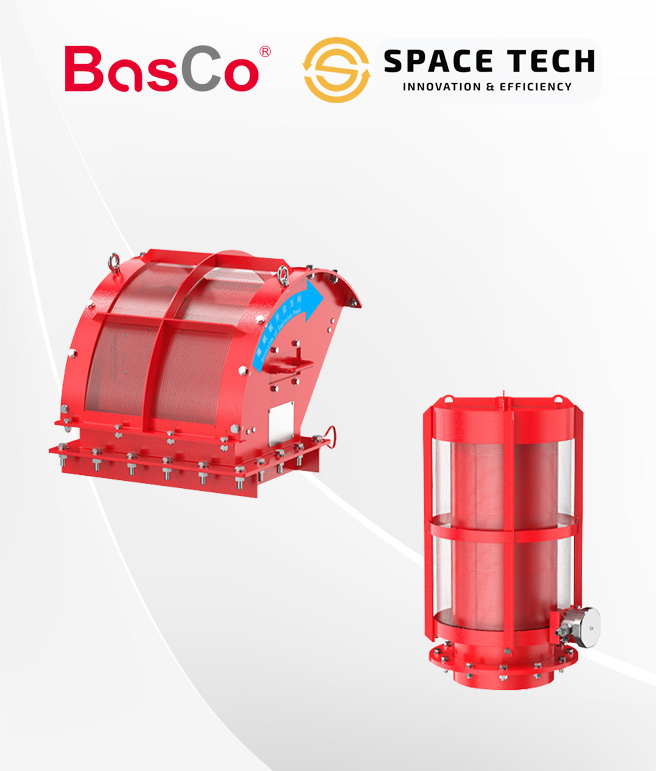
Explosion-Proof Ventilation Panel
| 1. Product Information
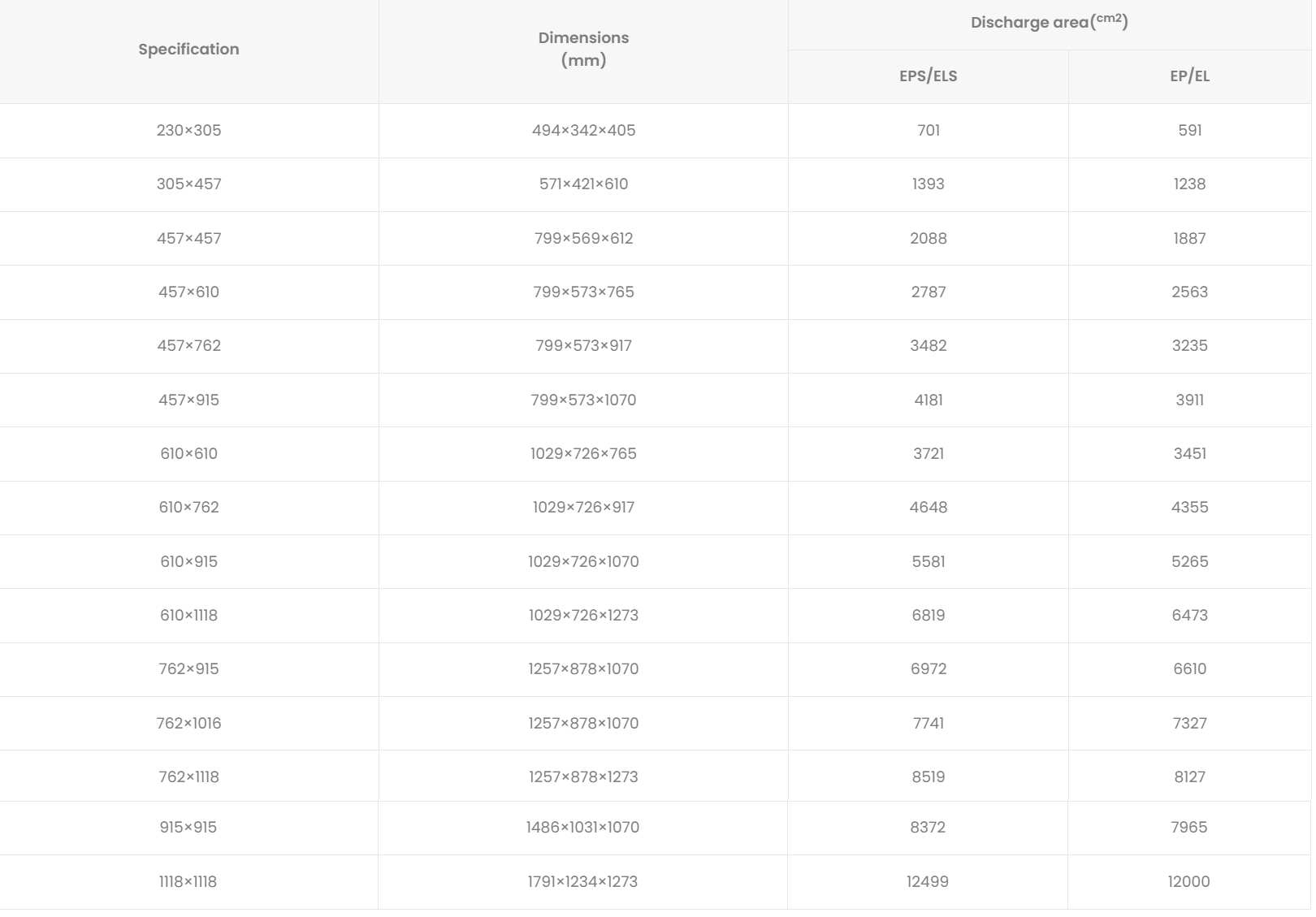
Model: FEV-S 230 x 305, Size: 230 x 305, Material: CS/304 Including vent ELS, Pressure: 0.01 Mpag @ 22°C, Tolerance: +/- 25%, Sensor: NBI, Junction box |
2. Key Features:
Flammless discharge device, requiring no special maintenance. |
| 3. Advantages of Explosion-Proof Panels/Explosion-Proof Panels
✔️ Safety protection: Prevents dust explosions indoors and outdoors. ✔️ Cost-effective: No operating costs. ✔️ Easy installation: No pressure reducing pipes required. ✔️ Safe construction: Includes at least one explosion-proof panel and a fire-resistant element. |
4. Operating Principle
🔹 When an explosion occurs, the explosion-proof panel opens, allowing flames and high-pressure gases to escape. 🔹 The mesh-type fire barrier exchanges heat with the flames, rapidly cooling them down, releasing pressure and smoke. 🔹 It prevents the spread of flames, avoiding secondary explosions or multiple consecutive explosions. 🔹 Simultaneously, it reduces pressure and noise to safe levels. |
| 5. Instructions for Use
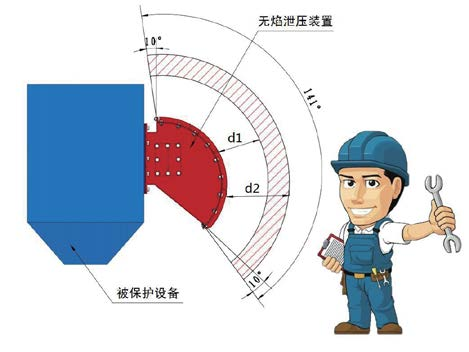
✔️ The device operates on a mechanical principle and does not require any operation after installation. ✔️ Determine the safe zone according to the standard: 👷 d2 > 2.5m (for personnel). |
6. Maintenance Instructions
✔️ Monthly: Inspect the pressure relief device surface, removing dust, snow, and ice. ✔️ Once a month: Check the pressure relief unit (explosion-proof plate) for cracks. ✔️ Once a week: Check the fire extinguishing system for blockages. ✔️ Once a week: If there is an optional alarm output, check the wiring system. |
| 7. Note:
If the pressure relief valve is broken, the equipment must be shut down and replaced immediately. |
8. Applications
Used in industries with high fire and explosion risks: Feedmills, Wood, Fertilizers, Plastics, Cement |
🛡 Ensuring safety – Minimizing risks – Providing effective protection!
 |
 |
 |